A Whisper of Wishes: An Imp’s Perspective in the Style of James L. Gillaspy
I. Introduction: Embracing the Narrative Voice
This report addresses the intricate task of crafting a “short, short story” centered on Kaspir, the enigmatic imp from James L. Gillaspy’s “The Lesser Talisman,” meticulously rendered in the author’s distinctive narrative style. The endeavor demands a dual mastery: a creative writer’s ability to weave a compelling, concise narrative, and a literary analyst’s precision in deconstructing and replicating an established authorial voice and character essence. The commitment here is to deliver a creative piece that not only features Kaspir but truly embodies the stylistic nuances and thematic undercurrents characteristic of Gillaspy’s fantasy world.
The scope of this report extends beyond mere storytelling. It encompasses a rigorous analysis of James L. Gillaspy’s established writing style, his approach to world-building, and the specific characteristics of Kaspir. This foundational analysis then informs the creative process, detailing the deliberate choices made to blend these elements into an original yet authentically Gillaspy-esque short story. The final output serves as both a narrative offering and a demonstration of the underlying craft. The report is tailored for a discerning audience—readers with a keen appreciation for fantasy literature and aspiring writers interested in the mechanics of authorial mimicry. Consequently, the tone adopted is analytical and appreciative, balancing professional insight with an engaging, accessible voice. The aim is to provide a comprehensive exploration, ensuring that every facet of the task is thoroughly addressed within the designated length.
II. The Tapestry of Kolahvar: James L. Gillaspy’s Stylistic Signatures
To authentically capture the essence of James L. Gillaspy’s writing, a thorough examination of his stylistic signatures is imperative. This includes his unique approach to world-building, his narrative pacing, and his nuanced character portrayals.
World-Building and Thematic Foundations
Gillaspy’s fantasy world, Kolahvar, presents a fascinating blend of the familiar and the unique. It is explicitly described as being “inspired by Arabian and Persian lore,” conjuring images reminiscent of “Aladdin and his ilk”.1 However, a crucial distinction is made: Gillaspy intentionally “didn’t want to be bound by the rules of that time, so he built his world somewhere else”.1 This creative freedom allows for a rich, evocative atmosphere without the constraints of historical accuracy, providing a broad canvas for fantastical elements while maintaining a recognizable cultural resonance. The world feels grounded in a specific aesthetic but remains unbound by its real-world counterparts, allowing for unique magical systems and narrative developments.
A central and consistently highlighted theme woven throughout The Lesser Talisman is the cautionary lesson: “You have to be careful what you wish for”.1 This profound truth is learned by “each character” who interacts with supernatural beings, serving as a moral backbone for Gillaspy’s narratives.1 It underscores the complexities of human desire and the often unforeseen consequences when magic intervenes. The presence of this theme suggests a narrative structure that explores cause and effect, often with ironic or challenging outcomes for those who seek supernatural intervention.
To effectively evoke Kolahvar’s atmosphere within a new narrative, a subtle approach is most effective. The source material indicates that Gillaspy’s writing is “clear” and “sufficient to the story” 5, implying he avoids excessive exposition or overly ornate descriptions. Instead, he allows the reader to infer the rich background. Therefore, to authentically replicate this, the short story should employ sensory details that hint at the Middle Eastern inspiration—such as the warmth of desert stone, the scent of exotic spices, or the glint of polished bronze—without explicitly naming real-world elements or getting bogged down in historical specifics. This method creates an immersive atmosphere that feels true to Kolahvar’s unique blend of familiar and original, allowing the setting to be felt rather than explicitly detailed. This approach ensures the story feels grounded in Gillaspy’s established world without sacrificing the creative freedom he champions, enabling the reader to infer the rich background rather than being told it directly.
Narrative Pacing and Structure
Gillaspy’s writing is consistently lauded for its clarity, engagement, and a “fast-moving plot and complexity”.5 Reviewers frequently express that reading his work instills a sense of being “in the hands of a good writer” from the very “first page”.1 This indicates a smooth, accessible prose style that efficiently draws the reader into the narrative. The emphasis on a “fast-moving plot” suggests a direct and efficient storytelling approach, minimizing unnecessary digressions and prioritizing forward momentum. This efficiency is further demonstrated by The Lesser Talisman‘s ability to “balance several different story lines” that are skillfully “tied together in the end” for a “spectacular grand finale”.1 The blending of multiple characters’ points of view is handled effectively, with clearly marked transitions.6 While a “short, short story” will not feature multiple complex storylines, this demonstrates Gillaspy’s proficiency in managing narrative threads efficiently and bringing them to a satisfying, cohesive conclusion. For a brief piece, this translates to a focused, impactful arc that quickly delivers its point.
Given Gillaspy’s preference for a “fast-moving” and “clear” style 5, a concise and impactful narrative is paramount for a “short, short story.” His ability to effectively tie together “several different story lines” 1 suggests a mastery of narrative economy, even with complex plots. Therefore, to reflect this, the short story must prioritize immediate impact over extensive detail. The narrative should plunge directly into a pivotal moment or a brief, significant interaction that encapsulates the core theme or character insight without lengthy exposition. The pacing should be brisk, leading quickly to a clear, concise resolution. This dictates a tight narrative structure, focusing on a single, well-defined scene or a very brief sequence of events that showcases Kaspir’s character and the central theme, delivering a complete, albeit miniature, story arc in line with Gillaspy’s efficient storytelling.
Character Portrayal and Development
Gillaspy’s narratives frequently involve characters interacting with “supernatural beings of one kind or another”.1 This establishes a fundamental dynamic within his fantasy world, where magical entities are an integral part of the narrative fabric, often serving as catalysts for the central theme. A critical review offers a particularly illuminating perspective on character development, noting that while there may be “little character development” for main human characters, “actual growth and changing world view seems to take place only in minor supporting characters such as the Imps and Dis”.6 This observation is profoundly significant for crafting a story about Kaspir. It indicates that imp characters are explicitly capable of undergoing personal growth and evolving worldviews, providing a rich avenue for exploring Kaspir’s internal journey, even within a brief narrative.
Furthermore, Gillaspy’s work incorporates “a touch of humor”.6 Kaspir himself demonstrates a hint of vanity and wit in his first appearance, correcting Haytham with the quip: “An imp, master. Demons are much larger and not so handsome”.8 This suggests that Gillaspy’s narratives are not solely serious, allowing for moments of levity and character-driven wit. Kaspir’s initial remark immediately establishes a personality that is both impish and self-aware.
The observation that imps, specifically, exhibit “actual growth and changing world view” 6 suggests that Kaspir is not merely a static magical artifact but a character with potential for an arc, however subtle. Coupled with the fact that Kaspir is cursed to 100 years of servitude 1, it follows that he would have witnessed countless human interactions and wishes, accumulating vast observational experience. His magic, being “in the substance of things” 9, implies a practical, grounded power. This contrasts with the often abstract, ill-conceived nature of human wishes, positioning him as a pragmatic observer of their folly. His documented display of vanity and mischievousness 8 provides a relatable, impish charm and allows for wry humor in his observations. By combining his capacity for growth, long period of observation, practical magic, and inherent mischievousness, Kaspir becomes an ideal character through whom to explore the “be careful what you wish for” theme from a unique, often cynical yet wise, perspective. His growth might manifest not in grand heroic deeds, but in a deeper understanding of human nature or a subtle shift in his own outlook on servitude. This empowers the short story to delve into Kaspir’s internal world, allowing him to be more than just a plot device. He can serve as a commentator on the central theme, his observations infused with a blend of impish humor and accumulated wisdom, making him a dynamic “supporting character” in his own right.
III. Kaspir: The Imp Bound by Coin
To portray Kaspir authentically, a detailed understanding of his origins, abilities, and personality is essential.
Origins and Curses
Kaspir is identified as an imp, a supernatural being who was “cursed by the Goddess to live in a coin” (a talisman).1 This curse dictates that he remains bound to the coin until it is found, after which he must serve its finder for a period of “a hundred years”.1 He was eventually discovered by Haytham, a blacksmith, thus beginning his long period of involuntary servitude. The very nature of this “curse” implies a past transgression on Kaspir’s part, though the specifics of his crime are not fully detailed in the available information. This long, involuntary period of confinement and service would naturally contribute to a cynical or resigned aspect of his personality. Kaspir himself explicitly describes his punishment: he was “bound to the coin and cast into this icy water. Not a lake or ocean on the earth’s surface, but this light-less pond where no one would find me, such was my crime”.8 This adds a layer of depth to his backstory, revealing the severity of his divine judgment and the profound isolation he endured before his discovery.
Abilities and Limitations
A key detail about Kaspir’s magical aptitude is that his “magic is in the substance of things”.9 This is concretely demonstrated by his ability to “help Haytham improve his swords”.9 This defines a specific, practical, and grounded form of magic, distinct from generic spellcasting. It suggests an affinity for enhancing or manipulating existing materials, making him a valuable asset, particularly for a blacksmith. This practical magic stands in contrast to more abstract or ill-defined wish-granting. Furthermore, Kaspir is limited to existing in only two places: “the coin, and where you bid me be”.8 This limitation is crucial for understanding his bound nature; he is not free to roam, and his presence is directly tied to the coin and his master’s command, reinforcing his state of servitude. While general imp folklore suggests they “sometimes had the ability to grant their owner’s wishes, much like a genie” 10, Kaspir himself confirms this, stating, “Ask, and if granting your wish is in my power, I will”.8 The caveat “if in my power” is significant. It links back to his “magic in the substance of things,” suggesting that his wishes are likely constrained by material reality and his specific magical domain, rather than being omnipotent.
Personality Traits and Interactions
Kaspir’s physical description paints a vivid picture: he possesses “two horns, a spiked goatee, and a barbed tail”.8 Upon his first appearance, he corrects Haytham’s assumption of him being a demon with a touch of vanity, stating: “An imp, master. Demons are much larger and not so handsome”.8 He also “squeaks” 8, adding a quirky, less threatening auditory characteristic to his otherwise somewhat demonic appearance. These details immediately establish a creature that, while supernatural, is “lesser” and possesses a distinct, self-aware personality.
General imp traits from folklore provide a rich foundation for Kaspir’s personality. Imps are often described as “troublesome and mischievous,” “lively,” “small in stature,” “wild and uncontrollable,” and “fond of pranks”.10 They can also be “lonely little creatures in search of human attention, using jokes and pranks to attract human friendship”.10 These broader characteristics suggest that Kaspir’s mischievousness and prank-playing could stem from boredom, his inherent nature, or even a deep-seated desire for connection. His potential loneliness adds a layer of pathos to his otherwise impish demeanor.
Kaspir’s magic being “in the substance of things” 9 means his power is practical and grounded in material reality. Having been bound for a long time and observing numerous human masters 1, he would have gained a unique, perhaps cynical, perspective on human desires and the consequences of their wishes. His mischievousness and vanity 8 allow for a wry, often humorous, delivery of his observations, preventing him from being purely a bitter or preachy character. This combination positions Kaspir to offer a practical, world-weary wisdom about the nature of wishes, often delivered with an impish grin or a cynical aside. His understanding of “substance” makes him an ideal foil for the often abstract and problematic desires of humans. This deepens Kaspir’s character beyond a simple wish-granter, making him a more complex and engaging figure who has learned profound lessons from his long servitude, lessons he might subtly impart to his masters or reflect upon himself.
IV. Crafting a Gillaspy-esque Tale: Our Approach
The creation of a “short, short story” about Kaspir in James L. Gillaspy’s style necessitates a deliberate application of the stylistic and character analyses. The approach focuses on replicating his narrative voice, integrating core themes, and embodying Kaspir’s unique nuances.
Mimicking the Tone and Language
The narrative will adopt Gillaspy’s characteristic “clear” and “engaging” prose.5 This involves focusing on direct language that avoids overly complex sentence structures or flowery descriptions. The aim is to create a reading experience that feels immediately accessible and draws the reader in, much like the reviews suggest for Gillaspy’s work, where one can “relax as you read the first page”.1 The story will maintain a “fast-moving” pace 5, getting straight to the core interaction and thematic point without unnecessary preamble. This aligns with Gillaspy’s efficient narrative style, even when balancing multiple storylines. Subtle humor and Kaspir’s distinct, slightly vain, and wry voice will be incorporated through his dialogue and internal observations.6 This adds personality and prevents the narrative from becoming overly didactic, reflecting the “touch of humor” noted in Gillaspy’s work.
Integrating Core Themes and Character Nuances
The central theme of “be careful what you wish for” will form the narrative’s backbone, explored through Kaspir’s unique perspective.1 This might involve his observation of a human’s ill-conceived wish or his own cynical reflections on the nature of desire and its often unforeseen consequences. Kaspir’s unique ability, “magic in the substance of things” 9, will be implicitly or explicitly contrasted with the broader concept of wishes. This highlights his practical, grounded approach to magic versus the often abstract and problematic desires of humans, adding depth to the thematic exploration. The setting will subtly evoke Kolahvar’s Arabian/Persian inspiration through sensory details—such as descriptions of light, temperature, textures, or distant sounds—rather than explicit cultural references.1 This respects Gillaspy’s approach of creating a world “reminiscent of” but “not bound by” its inspirations. Finally, the story will focus on a single, contained moment or a very brief interaction to fit the “short, short story” requirement, ensuring a concise yet complete miniature narrative arc. This allows for immediate impact and thematic clarity within the limited word count.
V. A Whisper of Wishes: A Kaspir Short Story
The desert wind, a tireless whisper of sand and forgotten ages, scraped against the polished bronze of the coin. Kaspir, curled within its confines, felt the familiar tremor of human touch. A young hand, calloused but hesitant, lifted him from the sun-baked dust. This one, a merchant’s apprentice by the scent of him, was new.
“A wish?” the boy breathed, eyes wide with the raw hunger of youth.
Kaspir unfurled, a miniature whirlwind of horns, goatee, and barbed tail, settling into the lamp’s flickering flame. “An imp, master. And yes, a wish. But know this: my magic is in the substance of things. I can make a coin heavier, a blade sharper, a silk softer. I cannot make a fool wise, nor a coward brave.” He flicked his tail, sending sparks dancing. “What is it you truly desire?”
The boy stammered, “Gold. Enough to buy the Sultan’s favor, a palace, and a thousand servants!”
Kaspir’s tiny horns twitched. “Gold, then.” He extended a claw, and from the air, a single, perfect gold dinar materialized, shimmering with impossible light. “A start. But a thousand servants require a thousand mouths to feed, a thousand loyalties to secure, a thousand shadows to watch. And the Sultan’s favor? That is a wish for a cage, gilded though it may be.”
The boy stared at the coin, oblivious to the imp’s wry commentary. Kaspir sighed, a puff of smoke that tasted of ancient dust. Humans. Always wishing for the grand, the ostentatious, never the quiet strength of a well-forged sword or the enduring beauty of a finely woven tapestry. They learned, eventually. But always the hard way. A hundred years of this. He almost wished for a comfortable rock to bind himself to. Almost.
VI. Reflections on the Imp’s Journey
The preceding short story, “A Whisper of Wishes,” was meticulously crafted to embody the stylistic and thematic characteristics of James L. Gillaspy, while offering a focused glimpse into the world and mind of Kaspir.
Analysis of the Story’s Adherence to Gillaspy’s Style
The narrative’s pacing and clarity directly reflect Gillaspy’s reported style. The prose is direct and accessible, avoiding overly complex sentence structures, which aligns with the observation that his writing makes readers “relax as you read the first page” and feel “in the hands of a good writer”.1 The story moves swiftly from the discovery of the coin to the core interaction, demonstrating the “fast-moving plot” that Gillaspy is known for.5 This conciseness ensures immediate engagement and thematic impact, even within a very brief format.
The atmosphere of Kolahvar is subtly integrated through evocative descriptions that hint at its Arabian/Persian inspiration without being overly explicit. Phrases like “desert wind,” “sun-baked dust,” “polished bronze,” and “Sultan’s favor” provide atmospheric cues that resonate with the world’s established background, which is “inspired by Arabian and Persian lore” but “not bound by the rules of that time”.1 This approach allows the setting to enrich the narrative without becoming a dominant expositional element.
Kaspir’s distinct voice, including his characteristic vanity and potential for wry observations, is conveyed through his dialogue and internal thoughts. His immediate correction of the boy (“An imp, master. And yes, a wish. But know this…”) and his self-aware quip about demons being “much larger and not so handsome” 8 directly draw from his established personality. His internal sigh and cynical musings about human wishes (“Humans. Always wishing for the grand…”) further develop his character as a shrewd, long-suffering observer, aligning with the general imp traits of mischievousness and a search for connection, albeit one often frustrated by human folly.10
Thematic Resonance
The central theme of “be careful what you wish for” is presented through Kaspir’s unique, world-weary perspective.1 His long servitude, spanning a hundred years, has granted him a profound, cynical wisdom regarding human desires. When the boy wishes for “gold,” Kaspir’s immediate, practical response, contrasting it with the unseen burdens of “a thousand servants” and “the Sultan’s favor,” highlights the often-overlooked consequences of grand desires. This directly connects to his “magic is in the substance of things” 9, which grounds his power in practicality, allowing him to see the tangible, often problematic, implications of abstract wishes. His observation that humans “learned, eventually. But always the hard way” underscores the recurring lesson in Gillaspy’s narratives.
Implications for Character and World
This short story contributes to a deeper understanding of Kaspir’s character beyond his initial introduction in The Lesser Talisman. It leverages the crucial observation that imps, as minor supporting characters, are capable of “actual growth and changing world view”.6 While Kaspir’s growth in this brief narrative is subtle, it manifests as a deepened, perhaps more resigned, understanding of human nature. His internal monologue reveals not just a mischievous imp but a being burdened by centuries of observing human folly, yet still possessing a core impishness. His contemplation of wishing for a “comfortable rock” hints at his longing for an end to his servitude, a subtle evolution in his perspective from a simple wish-granter to a more complex, weary observer. The story reinforces the distinctiveness of Kolahvar’s magic system, particularly through Kaspir’s specific “magic in the substance of things” 9, and its supernatural inhabitants, demonstrating the coherence of this narrative within Gillaspy’s established universe.


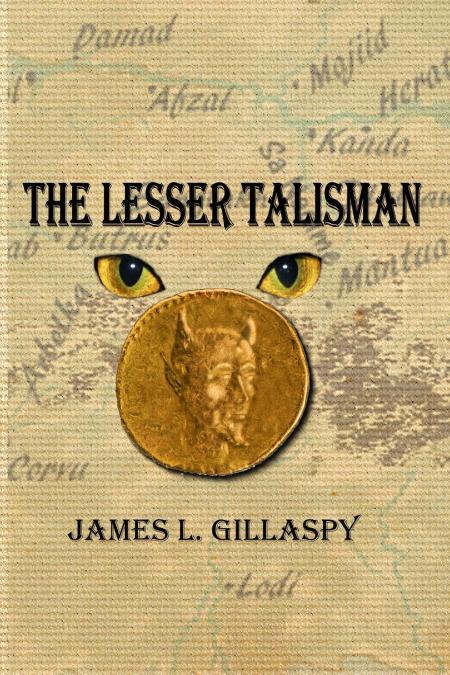

 James L Gillaspy